
Every year, North American railroads retire approximately 20 million creosote-treated wooden ties. Globally, that number approaches 120 million. Under conventional disposal — landfilling or uncontrolled incineration — each tie represents both an environmental liability and a lost opportunity. CO2Rail is developing integrated thermochemical systems that transform this hazardous waste stream into a suite of high-value carbon products: activated carbon for water and air purification, biochar for soil restoration and long-term carbon sequestration, synthetic fuels, turquoise hydrogen, and bioenergy with carbon capture and storage (BECCS). The result is a facility that doesn't just dispose of waste — it inverts the liability into verified, monetizable carbon removal.
The numbers are significant. A single retired tie contains roughly 45 kg of carbon — enough, if properly sequestered, to offset the CO₂ equivalent of burning several gallons of diesel. Across the global retirement stream, the carbon capture potential of waste ties exceeds 19 million metric tonnes of CO₂ per year. No commercial system exists today to capture that resource at scale. CO2Rail's reclamation platform is designed to fill that gap, with modular facilities deployable directly at rail yards, tie recycling depots, and industrial hubs — minimizing transport logistics and maximizing carbon accountability from feedstock to final product.
Creosote-treated railroad ties are classified as hazardous waste — but they are also one of the most carbon-dense, energy-rich biomass feedstocks available at industrial scale. CO2Rail's tie reclamation system processes retired ties through pyrolysis, steam activation, and gasification pathways to produce activated carbon, biochar, synthetic diesel, and hydrogen — all while capturing and sequestering the CO₂ generated in the process. Every output pathway is engineered for net-negative lifecycle emissions, with AI-driven process monitoring and ESG-linked reporting built into the platform from the ground up.
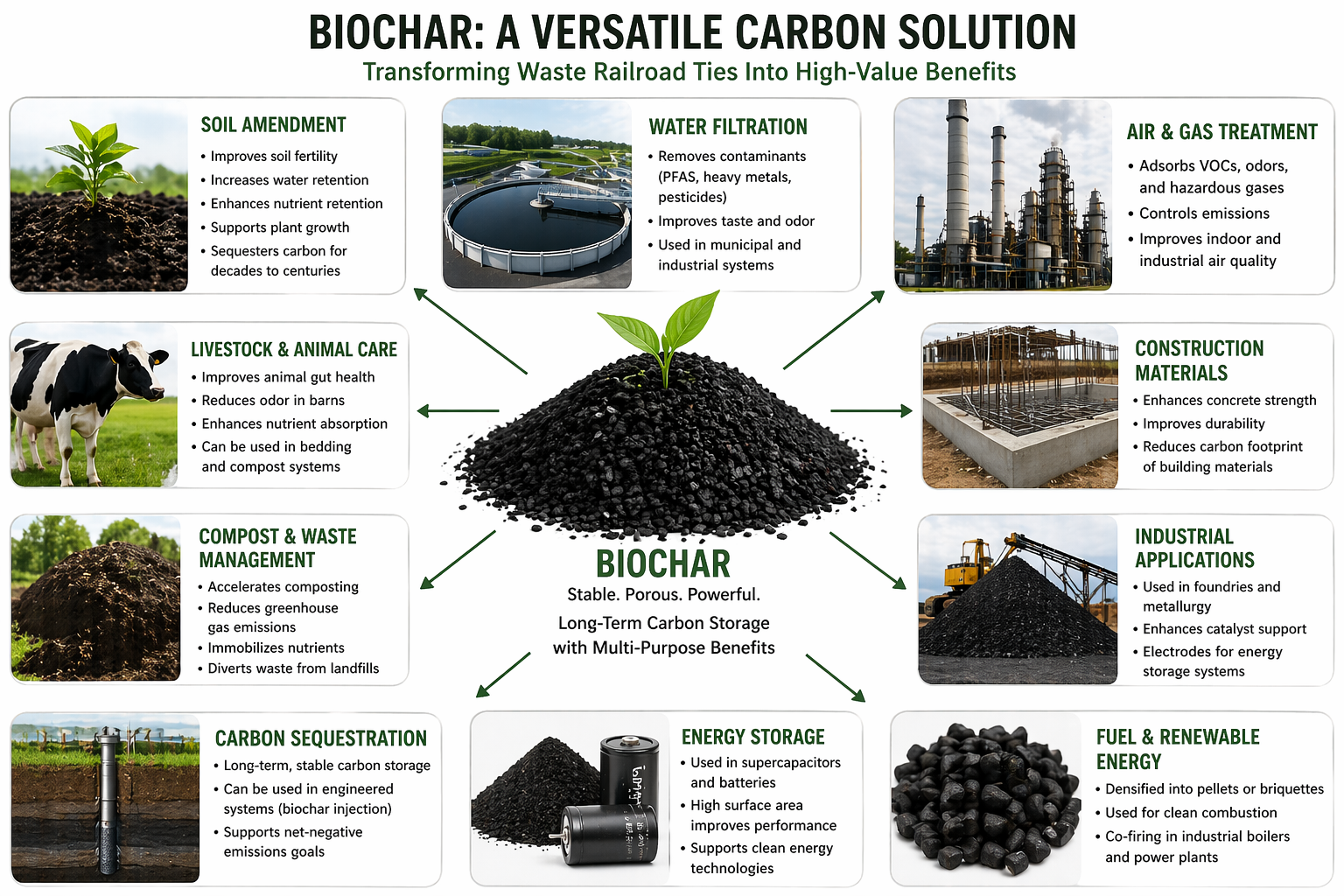
Activated carbon derived from waste ties meets or exceeds performance specifications for municipal water filtration, PFAS removal, industrial air purification, and electrochemical energy storage. Biochar outputs qualify for verified carbon credit programs and can be applied to soil restoration, mine reclamation, and construction materials. Synthetic fuels produced via Fischer-Tropsch synthesis can be transferred directly to locomotive operators, closing the carbon loop within the rail network itself. What enters the facility as a regulated waste problem exits as a portfolio of products with measurable climate value and strong commercial demand.
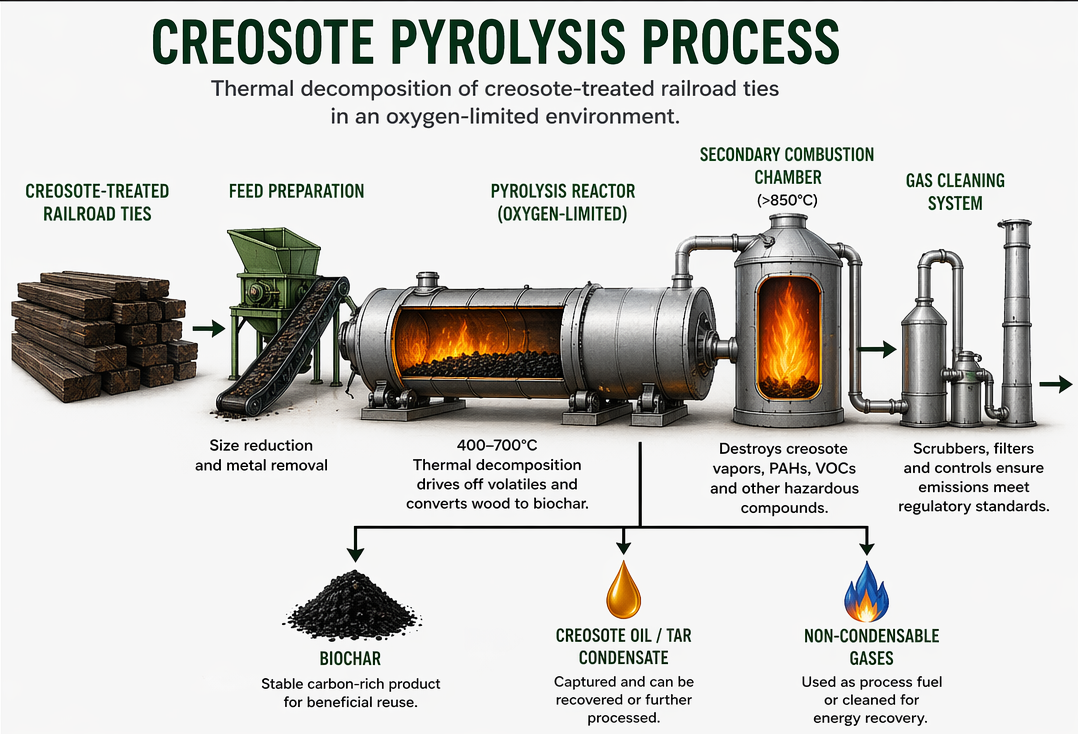
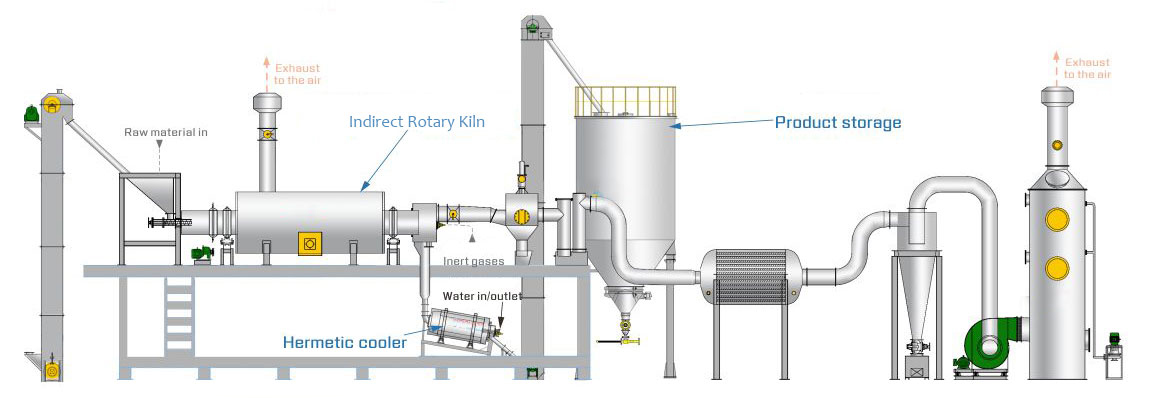
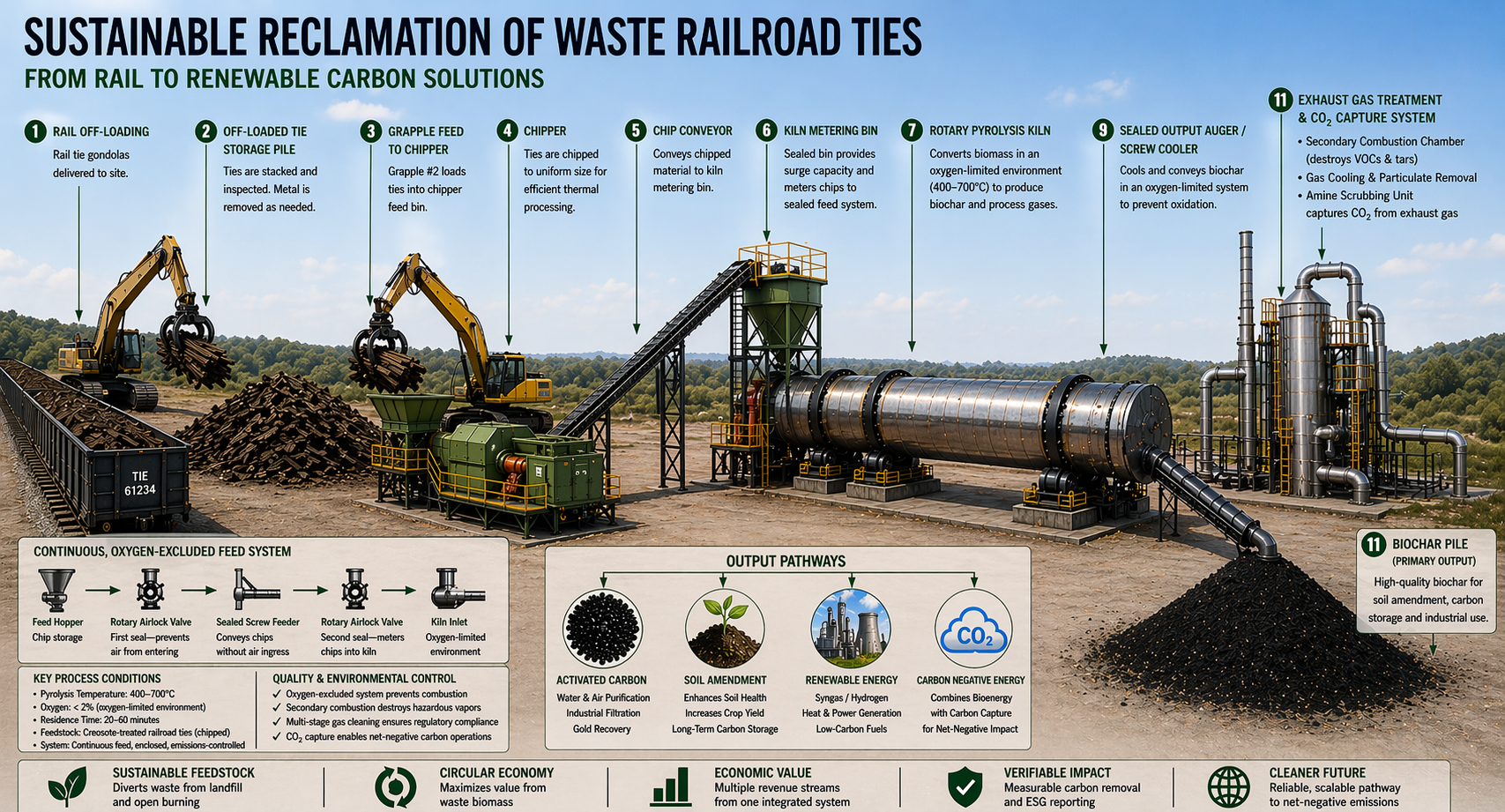
The core of CO2Rail's tie reclamation system is an indirect rotary kiln that thermochemically converts shredded tie feedstock under oxygen-limited conditions — volatilizing creosote compounds to a secondary combustion chamber while yielding high-fixed-carbon biochar or char ready for steam activation into premium activated carbon.
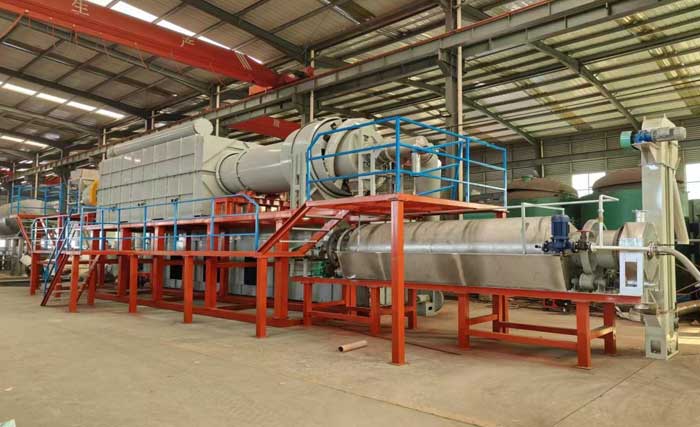
A commercial-scale rotary pyrolysis system of the type deployed in CO2Rail's modular reclamation facilities. Units of this configuration can process several tons of retired railroad ties per hour, operating continuously with integrated emissions control, magnetic metal separation, and AI-driven process monitoring — deployable directly at rail yards with minimal site infrastructure.